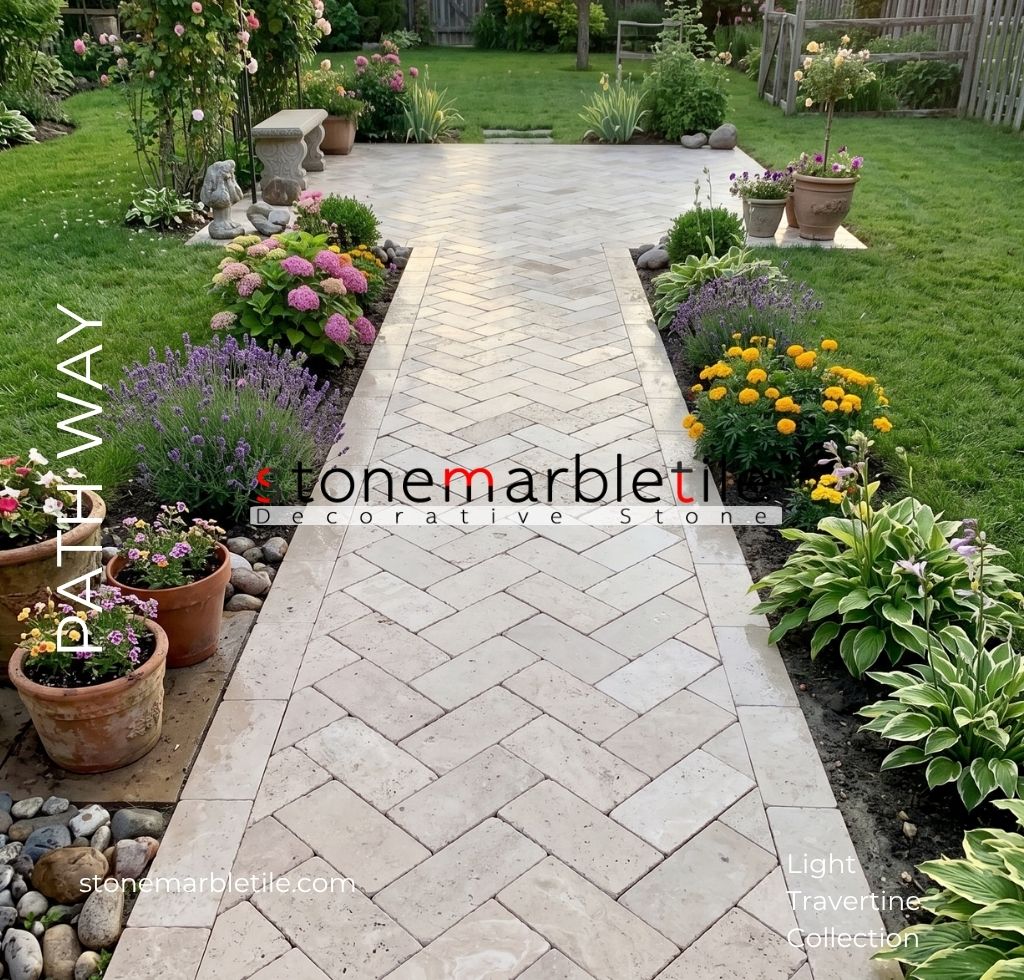
Light Travertine Path Way
Color: Light Travertine
Origin: Turkiye

In landscape architecture and outdoor hardscaping, selecting materials that fulfill both aesthetic visions and strict engineering requirements is vital. A light travertine pathway project offers outstanding technical performance due to the unique petrographic and mechanical characteristics of travertine—a sedimentary rock composed primarily of calcium carbonate (CaCO3). This document outlines the physical-mechanical profiles, surface treatment criteria, and sub-base guidelines for architectural paving.
1. Material Characterization & Mechanical Strength
Travertine features a distinct vuggy (porous) structure formed by the precipitation of carbonate minerals. For an elite travertine walkway technical specs profile, parameters such as apparent density, open porosity, and compressive strength must be carefully cross-examined to ensure resistance against freeze-thaw cycles. Below are the standard laboratory test metrics for premium light travertine:

2. Surface Finishes and Slip Resistance Variables (SRV)
While natural stone compressive strength guarantees long-term durability, surface safety determines operational viability. To achieve optimal traction for public and residential pathways, specific finishes are specified: Tumbled Finish: A mechanical aging process that rounds the edges and smooths the face. This process maintains open surface cavities, yielding a Pendulum Test Value (PTV / SRV) of SRV ≥ 45 under wet conditions, classing it as highly slip-resistant.
Brushed (Patinato) Finish: Softens the stone while tracking its natural texture, creating a premium relief that scores high safety points without compromising cleanability.
Filling State: For outdoor pathways, leaving the stone “Unfilled” is highly recommended to expedite surface water runoff and elevate frictional resistance.
3. Sub-Base Engineering & Outdoor Stone Installation
The lifetime of a landscape architectural paving installation relies heavily on proper structural layers. The recommended layering sequence for a stable, frost-protected path involves:
Excavation: Earth removal to a depth of 150-200 mm, followed by subgrade compaction using a heavy vibratory plate.
Sub-Base Layer: A crushed stone aggregate matrix (0-40 mm gradation) laid at a thickness of 100 mm to direct drainage away from the stone.
Bedding Course: For rigid laying, a high-strength cement mortar bed is applied; for flexible laying, a 30-50 mm thick layer of clean, washed sand (0-5 mm grit) is preferred.
Joint Tolerances: Accommodating thermal expansion requires an absolute minimum joint gap of 3-5 mm. Joints should be swept with polymeric sand or fine quartz aggregates to prevent interlocking failures.